How to Make the Perfect Bibingka Filipino Rice Cake
Filipino · Medium · 45 min · 6 servings
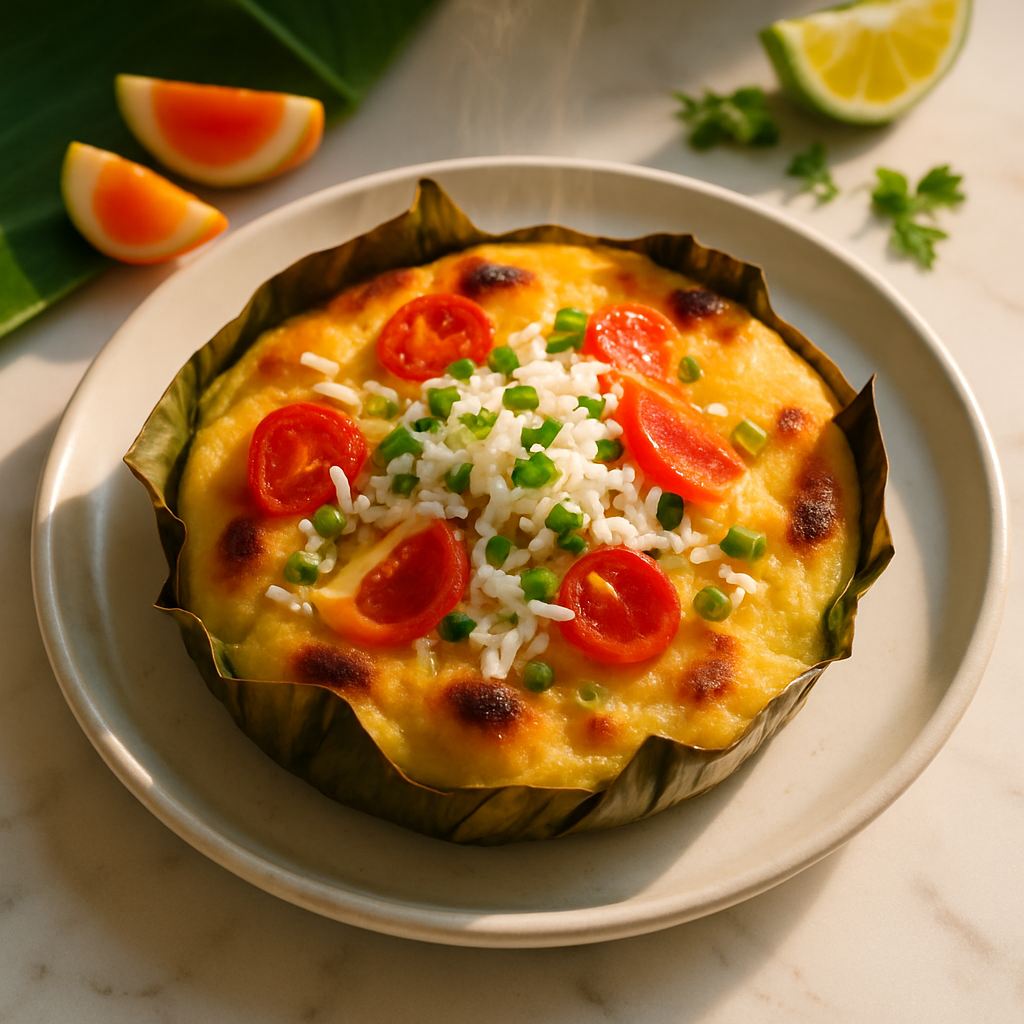
Bibingka is a traditional Filipino rice cake made from ground glutinous rice, coconut milk, and eggs, baked until it develops a soft, pillowy texture with slightly caramelized edges and a golden top. It is most closely associated with the Christmas season and is typically sold outside churches during early morning Misa de Gallo masses.
Why this recipe works
This Bibingka Filipino Rice Cake recipe has been crafted to deliver restaurant-quality results in your home kitchen. At just 45 minutes from start to finish, it fits perfectly into a busy schedule without sacrificing flavor. Each serving comes in at 340 calories with 9g of protein, making it a balanced choice for any meal.
What you will need
This recipe uses 6 simple ingredients that you can find at any grocery store:
- 2 cups galapong (ground glutinous rice flour)
- 1 cup coconut milk
- 3 large eggs, beaten
- 0.75 cup granulated white sugar
- 2 pieces salted duck eggs, sliced
- 0.5 cup grated quick-melt cheese or queso de bola
Step by step instructions
Step 1: Mix the Batter
In a large mixing bowl, whisk together the glutinous rice flour, sugar, beaten eggs, and coconut milk until a smooth and lump-free batter forms. The batter will be fairly thin and pourable. If your batter has lumps, pass it through a fine mesh strainer before baking. Allow it to rest for 10 minutes.
Step 2: Prepare the Pan and Bake
Preheat your oven to 375 degrees Fahrenheit. Grease a round 9-inch cake pan or individual banana leaf-lined ramekins generously with butter. Pour the batter into the prepared pan and bake for 20 to 25 minutes until the cake has set through the center and the top is beginning to turn light golden.
Step 3: Add Toppings and Continue Baking
Remove the bibingka from the oven and arrange the sliced salted duck eggs over the top, pressing them gently into the surface. Scatter the grated cheese generously over the top and return the cake to the oven. Broil on high for 3 to 5 minutes until the cheese melts and the top develops golden-brown caramelized spots.
Step 4: Brush with Butter and Serve
Remove from the oven and immediately brush the hot surface of the bibingka generously with softened butter to give it a glossy, rich finish. Let it cool for 5 minutes before slicing. Serve warm alongside a cup of hot salabat ginger tea or thick hot chocolate for an authentic Filipino experience.
Easy substitutions
Missing an ingredient? Here are some swaps that work perfectly:
- glutinous rice flour → regular rice flour for a slightly less chewy but still tender cake
- salted duck eggs → regular hard-boiled eggs with a pinch of salt as a less traditional substitute
Common mistakes to avoid
Watch out for these pitfalls that can affect your results:
- Baking at too high a temperature for too long, which dries out the bibingka and makes it dense and rubbery instead of moist and pillowy
- Adding the cheese and salted eggs at the beginning of baking rather than partway through, which causes the toppings to burn before the cake fully sets
Nutrition facts
Per serving: 340 calories, 9g protein, 48g carbs, 14g fat, 1g fiber.
Ready to cook?
Get the interactive recipe with adjustable servings, built-in timers, and ingredient checklist.
View full recipe →