How to Make the Perfect Exam Week Salmon Avocado Poke Bowl
Hawaiian-Japanese Fusion · Easy · 50 min · 2 servings
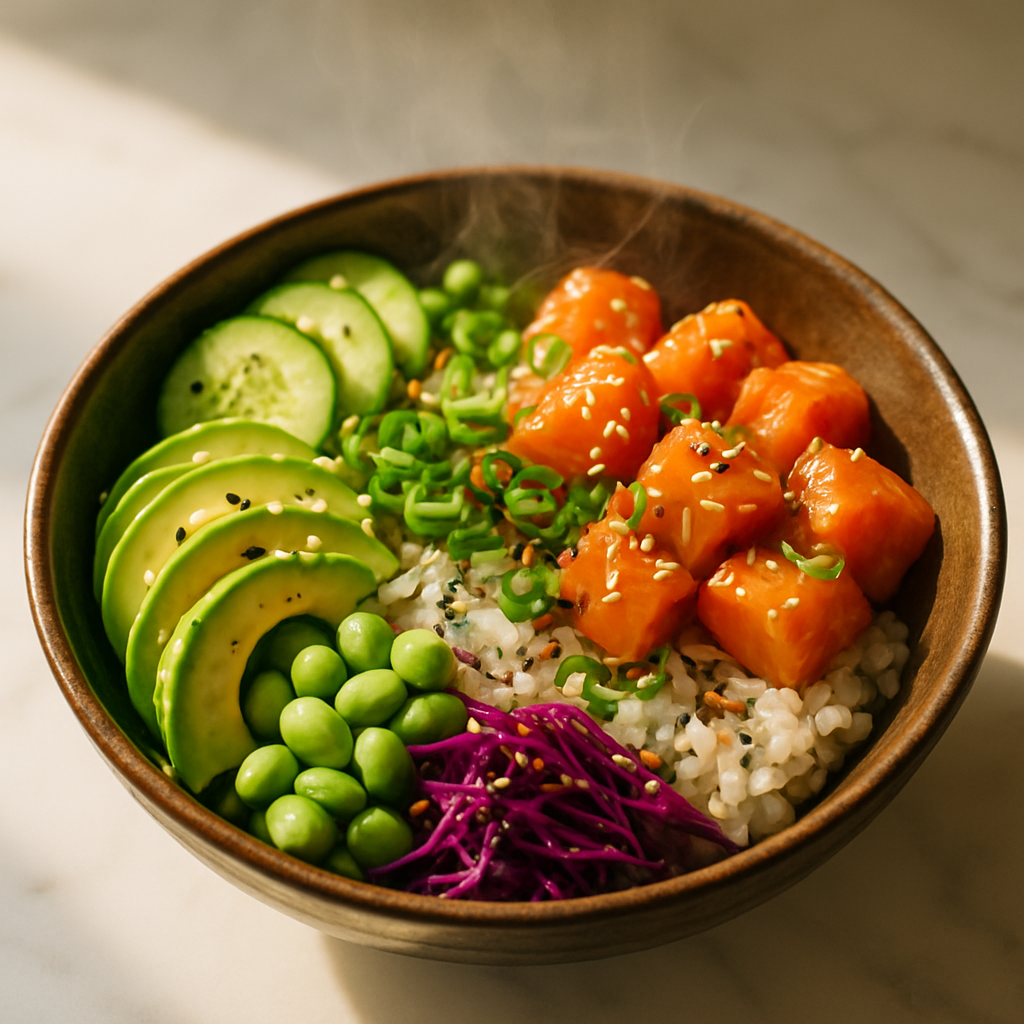
A vibrant, nourishing poke bowl packed with omega-3-rich salmon, creamy avocado, and wholesome toppings designed to fuel your brain through the most intense study sessions. Fresh, colorful, and incredibly satisfying, this bowl delivers sustained energy without the post-meal crash that can derail your focus.
Why this recipe works
This Exam Week Salmon Avocado Poke Bowl recipe has been crafted to deliver restaurant-quality results in your home kitchen. At just 50 minutes from start to finish, it fits perfectly into a busy schedule without sacrificing flavor. Each serving comes in at 620 calories with 42g of protein, making it a balanced choice for any meal.
What you will need
This recipe uses 24 simple ingredients that you can find at any grocery store:
- 300 g sashimi-grade salmon, cut into 1-inch cubes
- 3 tbsp gluten-free tamari sauce
- 1 tbsp toasted sesame oil
- 1 tsp fresh ginger, finely grated
- 1 tsp honey
- 1 tsp rice vinegar
- 1 tsp sriracha
- 2 cups sushi rice, uncooked
- 2.5 cups water
- 2 tbsp rice vinegar
- 1 tbsp sugar
- 1 tsp salt
- 1 large ripe avocado, sliced
- 1 cup edamame, shelled and cooked
- 1 cup cucumber, thinly sliced into half-moons
- 1 cup shredded purple cabbage
- 2 tbsp pickled ginger
- 2 tbsp toasted sesame seeds
- 3 stalks green onions, thinly sliced
- 1 sheet nori, cut into thin strips
- 3 tbsp Japanese mayonnaise (Kewpie)
- 1 tbsp sriracha
- 1 tsp toasted sesame oil
- 1 tsp fresh lime juice
Step by step instructions
Step 1: Cook the Sushi Rice
Rinse the sushi rice under cold water until the water runs clear, about 3 to 4 rinses. This removes excess starch and prevents gummy rice. Combine the rinsed rice and water in a medium saucepan. Bring to a boil over high heat, then reduce to the lowest possible simmer, cover tightly, and cook for 18. Remove from heat and let steam, still covered, for 10. Do not lift the lid during cooking.
Step 2: Season the Rice
While the rice rests, combine rice vinegar, sugar, and salt in a small bowl and microwave for 20 seconds, stirring until sugar and salt are fully dissolved. Transfer the cooked rice to a large wooden or glass bowl. Using a rice paddle or spatula, gently fold the vinegar mixture into the hot rice using a slicing motion rather than stirring. Fan the rice as you fold to help it cool and develop a subtle sheen. Allow to cool to room temperature.
Step 3: Marinate the Salmon
Ensure your salmon is sashimi-grade and very cold. Cut into uniform 1-inch cubes for even marination. In a medium bowl, whisk together gluten-free tamari, sesame oil, fresh grated ginger, honey, rice vinegar, and sriracha until well combined. Add the salmon cubes and gently toss to coat every piece evenly. Cover with plastic wrap and refrigerate for exactly 15 — no longer, as the acid can begin to break down the delicate fish texture.
Step 4: Prepare the Spicy Mayo
In a small bowl, whisk together Japanese mayonnaise, sriracha, toasted sesame oil, and fresh lime juice until smooth and fully combined. Taste and adjust the sriracha level to your heat preference. Transfer to a squeeze bottle or a small zip-lock bag with one corner snipped for easy drizzling. Set aside at room temperature.
Step 5: Prep All the Toppings
While the salmon marinates, prepare all bowl toppings. Halve, pit, and slice the avocado, keeping slices thick to prevent bruising. Slice the cucumber into thin half-moons. Shred the purple cabbage finely. Cook the edamame if using frozen — simply microwave with a splash of water for 2. Slice the green onions on a diagonal for a prettier presentation. Cut nori sheets into thin 2-inch strips using scissors. Toast sesame seeds in a dry pan over medium heat for 2 until golden and fragrant.
Step 6: Assemble the Bowls
Divide the seasoned sushi rice evenly between two wide bowls, filling each about halfway. Arrange toppings in distinct sections around the rice: place avocado slices fanning out on one side, cucumber half-moons beside them, a mound of shredded purple cabbage, and a generous pile of edamame. Place the marinated salmon cubes prominently in the center of each bowl. Tuck pickled ginger along one edge and scatter nori strips across the top.
Step 7: Garnish and Serve
Drizzle the spicy mayo generously over the salmon and across the entire bowl in a zigzag pattern. Sprinkle toasted sesame seeds liberally over everything. Finish with sliced green onions scattered on top. Serve immediately for the freshest flavor and best texture. If meal prepping, keep the salmon, rice, and toppings stored separately and assemble just before eating.
Easy substitutions
Missing an ingredient? Here are some swaps that work perfectly:
- sashimi-grade salmon → sashimi-grade tuna, cooked shrimp, or marinated tofu cubes for a vegan option
- sushi rice → cauliflower rice for a low-carb version or brown rice for extra fiber
- gluten-free tamari → coconut aminos for a soy-free and lower-sodium alternative
- Japanese mayonnaise → regular mayonnaise mixed with a tiny drop of rice vinegar and a pinch of sugar
- edamame → frozen peas or steamed broccoli florets
- honey → maple syrup or agave nectar for a vegan-friendly marinade
Common mistakes to avoid
Watch out for these pitfalls that can affect your results:
- Using non-sashimi-grade salmon — always confirm with your fishmonger that the salmon is safe for raw consumption
- Over-marinating the salmon for longer than 20, which causes the fish to become mushy and lose its silky texture
- Skipping the rinse on sushi rice, resulting in an overly starchy and clumped final product
- Lifting the rice pot lid during cooking, which releases steam and prevents proper cooking
- Adding the vinegar seasoning to hot steaming rice in the pot instead of transferring to a bowl first, which makes it gummy
- Cutting the avocado too far in advance without an acid coating, causing it to brown quickly
- Using regular soy sauce instead of tamari, which contains gluten and breaks the dietary requirement
- Not patting the salmon dry before marinating, which dilutes the flavor of the marinade
Nutrition facts
Per serving: 620 calories, 42g protein, 58g carbs, 24g fat, 9g fiber.
Ready to cook?
Get the interactive recipe with adjustable servings, built-in timers, and ingredient checklist.
View full recipe →