How to Make the Perfect Injera Platter
Ethiopian · Hard · 1470 min · 6 servings
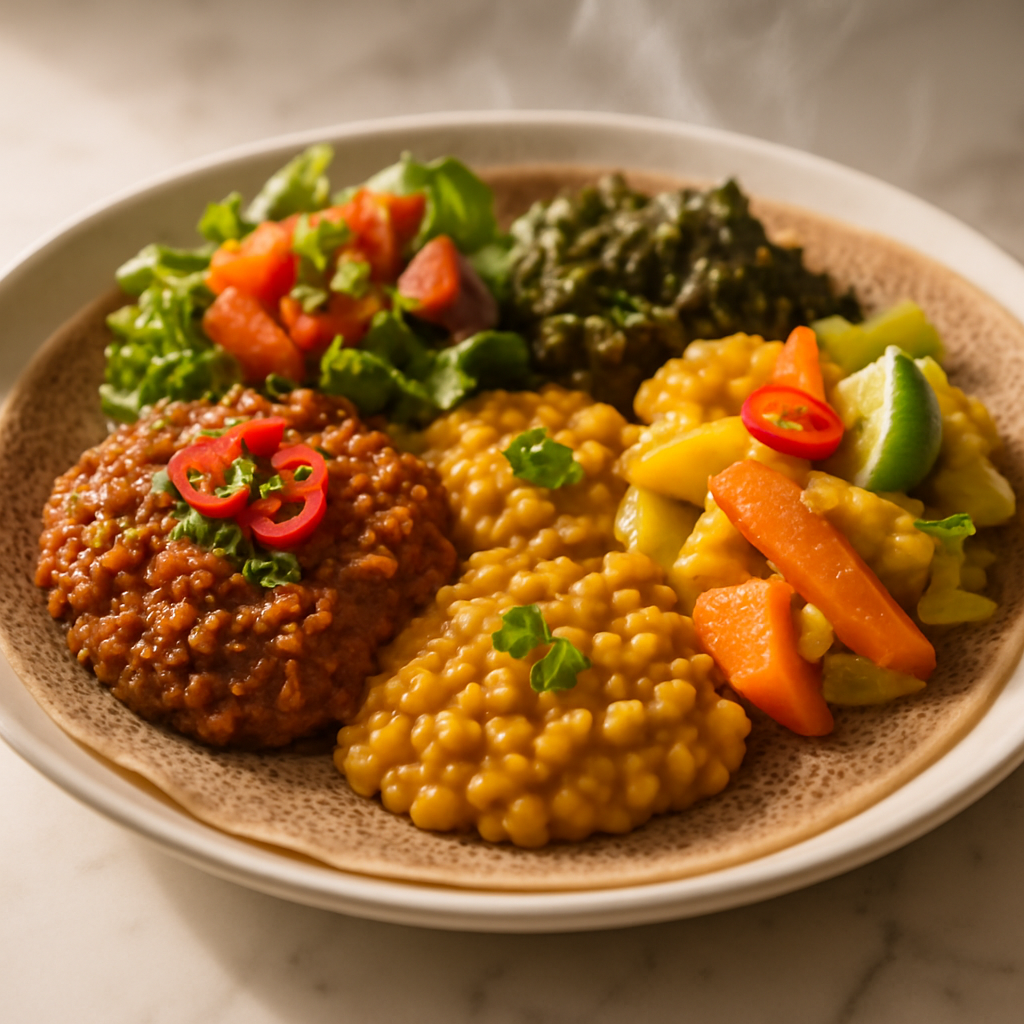
An Injera Platter is the quintessential Ethiopian communal dining experience where a large spongy sourdough flatbread is topped with an assortment of colorful stews, lentils, and salads to be shared by hand. The injera itself acts as both the plate and the utensil, and it is made from fermented teff flour batter.
Why this recipe works
This Injera Platter recipe has been crafted to deliver restaurant-quality results in your home kitchen. At just 1470 minutes from start to finish, it fits perfectly into a busy schedule without sacrificing flavor. Each serving comes in at 430 calories with 12g of protein, making it a balanced choice for any meal.
What you will need
This recipe uses 6 simple ingredients that you can find at any grocery store:
- 3 cups teff flour whole grain
- 3.5 cups water at room temperature
- 0.5 tsp active dry yeast optional for faster fermentation
- 1 tsp fine salt added just before cooking
- 0.25 cup club soda or sparkling water for lightness
- 1 tbsp neutral oil for greasing the pan
Step by step instructions
Step 1: Ferment the Batter
In a large bowl, whisk together the teff flour and water until no lumps remain. If using yeast, dissolve it in 2 tablespoons of warm water first then add to the batter. Cover the bowl loosely with a cloth or plastic wrap and leave at room temperature for 24 to 72 hours. The batter should become bubbly, smell pleasantly sour, and separate slightly into a liquid layer on top.
Step 2: Prepare the Batter for Cooking
Once fully fermented, stir the batter gently to recombine. Pour off some of the liquid if it has separated excessively. Add the salt and club soda and stir gently to incorporate. The batter should be thin, pourable, and lightly bubbly. It should coat a spoon but flow freely.
Step 3: Cook the Injera
Heat a large non-stick skillet or mitad over medium-high heat until very hot. Lightly brush with oil using a folded paper towel. Pour a ladleful of batter in a spiral from the outside in to cover the entire base of the pan in a thin even layer. Immediately cover with a lid and cook for 2 to 3 minutes. The injera is ready when the surface is fully set, covered in characteristic bubbles, and the edges lift away from the pan. Do not flip it.
Step 4: Assemble the Platter
Lay 2 large injera pieces overlapping on a round serving tray to cover it completely. Arrange spoonfuls of misir wot, gomen, shiro, and any other stews in distinct mounds around the injera surface. Roll additional injera into cylinders and place them around the edge of the platter for scooping. Serve immediately so everyone can tear pieces of injera and scoop the stews communally.
Easy substitutions
Missing an ingredient? Here are some swaps that work perfectly:
- teff flour → a mixture of 75 percent buckwheat flour and 25 percent all-purpose flour for a faster non-traditional version
- long fermentation → adding 2 tablespoons of apple cider vinegar to fresh batter for a quicker mild sourdough flavor
Common mistakes to avoid
Watch out for these pitfalls that can affect your results:
- Not fermenting the batter long enough which produces flat dense injera without the characteristic sour flavor and bubbly texture
- Flipping the injera to cook the second side which is never done traditionally and results in a dry rubbery texture
Nutrition facts
Per serving: 430 calories, 12g protein, 72g carbs, 10g fat, 9g fiber.
Ready to cook?
Get the interactive recipe with adjustable servings, built-in timers, and ingredient checklist.
View full recipe →