How to Make the Perfect Mediterranean Greek Salad Bowl
Mediterranean · Easy · 15 min · 4 servings
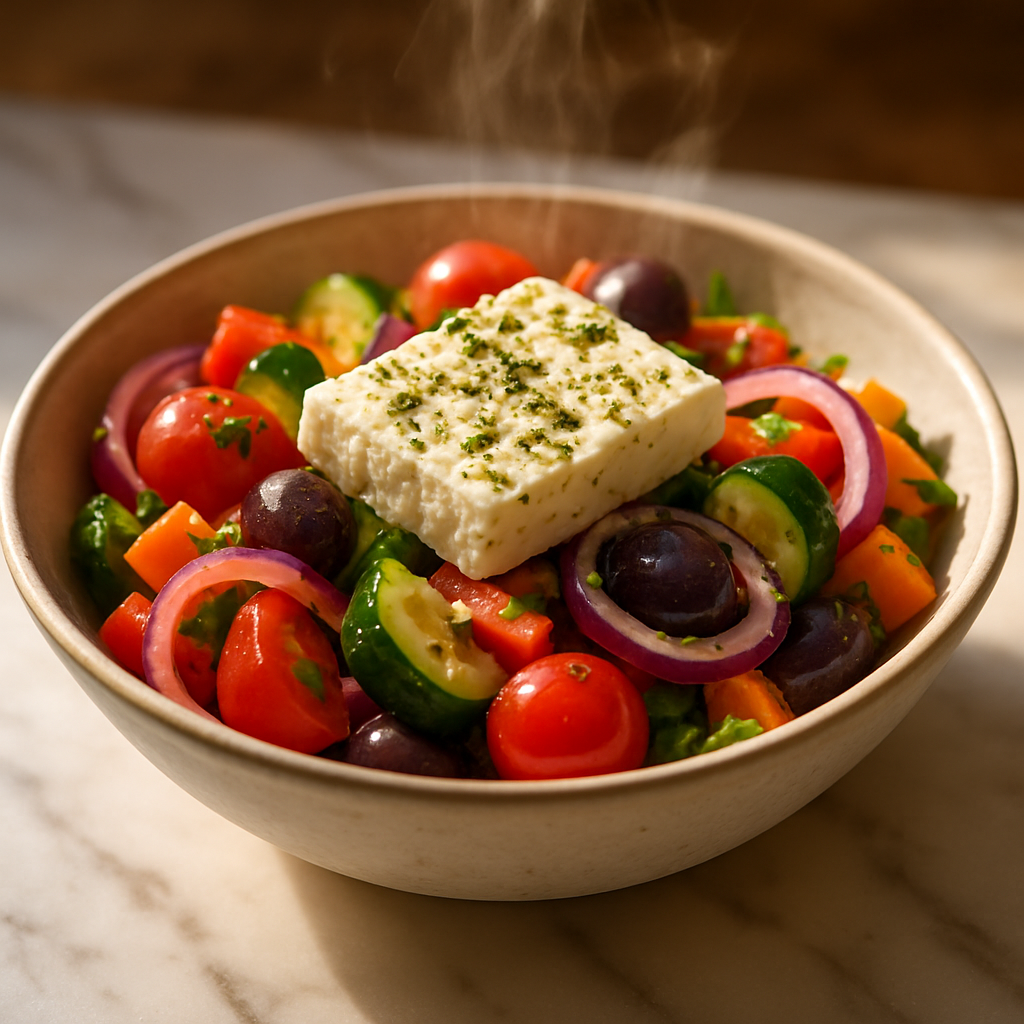
A vibrant, sun-kissed bowl bursting with crisp vegetables, creamy feta, and plump Kalamata olives, all brought together with a bright lemon-herb vinaigrette. This authentic Greek salad celebrates the simplicity of fresh, quality ingredients — no cooking required, just pure Mediterranean magic in every bite.
Why this recipe works
This Mediterranean Greek Salad Bowl recipe has been crafted to deliver restaurant-quality results in your home kitchen. At just 15 minutes from start to finish, it fits perfectly into a busy schedule without sacrificing flavor. Each serving comes in at 310 calories with 9g of protein, making it a balanced choice for any meal.
What you will need
This recipe uses 16 simple ingredients that you can find at any grocery store:
- 2 large English cucumbers, halved lengthwise and sliced into half-moons
- 3 cups cherry tomatoes, halved
- 1 large red onion, thinly sliced into half-rings
- 1 large green bell pepper, cored and chopped into chunks
- 1 cup Kalamata olives, pitted
- 200 g block feta cheese, cut into thick cubes
- 1 cup pepperoncini peppers, sliced
- 1/4 cup fresh flat-leaf parsley, roughly chopped
- 1/3 cup extra-virgin olive oil
- 3 tablespoons fresh lemon juice
- 1 tablespoon red wine vinegar
- 2 teaspoons dried oregano
- 1 teaspoon Dijon mustard
- 1 clove garlic, finely minced
- 1/2 teaspoon sea salt
- 1/4 teaspoon freshly cracked black pepper
Step by step instructions
Step 1: Prep the Vegetables
Slice the English cucumbers into half-moons and place them in a large wide salad bowl. Halve the cherry tomatoes and add them in. Thinly slice the red onion into half-rings — if you find raw onion too pungent, soak the slices in cold water for 5, then drain and pat dry before adding. Chop the green bell pepper into generous bite-sized chunks and add to the bowl.
Step 2: Add the Olives and Pepperoncini
Scatter the pitted Kalamata olives and sliced pepperoncini peppers evenly over the vegetables. These two ingredients are the salty, briny backbone of the salad, so distribute them well throughout.
Step 3: Whisk the Lemon-Oregano Dressing
In a small bowl or a jar with a lid, combine the extra-virgin olive oil, fresh lemon juice, red wine vinegar, dried oregano, Dijon mustard, minced garlic, sea salt, and cracked black pepper. Whisk vigorously until the dressing is fully emulsified and slightly thickened, about 30 seconds. Taste and adjust seasoning — it should be bright, tangy, and herbaceous.
Step 4: Dress and Toss the Salad
Pour about two-thirds of the dressing over the salad bowl. Using clean hands or two large spoons, gently toss everything together to coat the vegetables evenly. Reserve the remaining dressing to serve on the side or to drizzle over individual bowls.
Step 5: Top with Feta and Finish
Arrange the thick cubes of feta cheese across the top of the salad — do not toss them in or they will crumble. Scatter the freshly chopped flat-leaf parsley over everything and finish with an extra pinch of dried oregano. Drizzle any remaining dressing directly over the feta. Serve immediately for maximum crunch, or let the salad rest for 5 to 10 to allow the flavors to meld beautifully.
Easy substitutions
Missing an ingredient? Here are some swaps that work perfectly:
- English cucumber → Persian cucumbers or regular cucumbers with seeds scooped out
- Kalamata olives → any pitted black or green olives such as Castelvetrano
- Block feta cheese → dairy-free feta or firm tofu crumbled with a pinch of salt for a vegan option
- Pepperoncini peppers → banana peppers or pickled jalapeños for extra heat
- Fresh lemon juice → white wine vinegar for a slightly milder tang
- Red wine vinegar → apple cider vinegar
- Green bell pepper → yellow or orange bell pepper for a sweeter flavor
Common mistakes to avoid
Watch out for these pitfalls that can affect your results:
- Using pre-crumbled feta instead of a block — block feta is creamier, saltier, and holds its shape beautifully as a topping
- Over-tossing the salad after adding feta, which causes it to crumble into the dressing and turn muddy
- Using bottled lemon juice instead of fresh — fresh lemon juice makes a dramatic difference in the brightness of the dressing
- Cutting vegetables too small — Greek salad is known for its chunky, rustic cuts that provide satisfying texture
- Skipping the red onion soak if sensitive to raw onion — soaking in cold water for 5 removes sharpness while keeping the crunch
- Dressing the salad too far in advance, which causes the cucumbers and tomatoes to release water and make the bowl watery
- Using low-quality olive oil — since this is a no-cook recipe, the olive oil flavor is front and center, so use the best extra-virgin you can find
Nutrition facts
Per serving: 310 calories, 9g protein, 14g carbs, 26g fat, 3g fiber.
Ready to cook?
Get the interactive recipe with adjustable servings, built-in timers, and ingredient checklist.
View full recipe →