How to Make the Perfect Midnight Fire Ramen with Silky Soft-Boiled Eggs
Japanese-Korean Fusion · Easy · 30 min · 2 servings
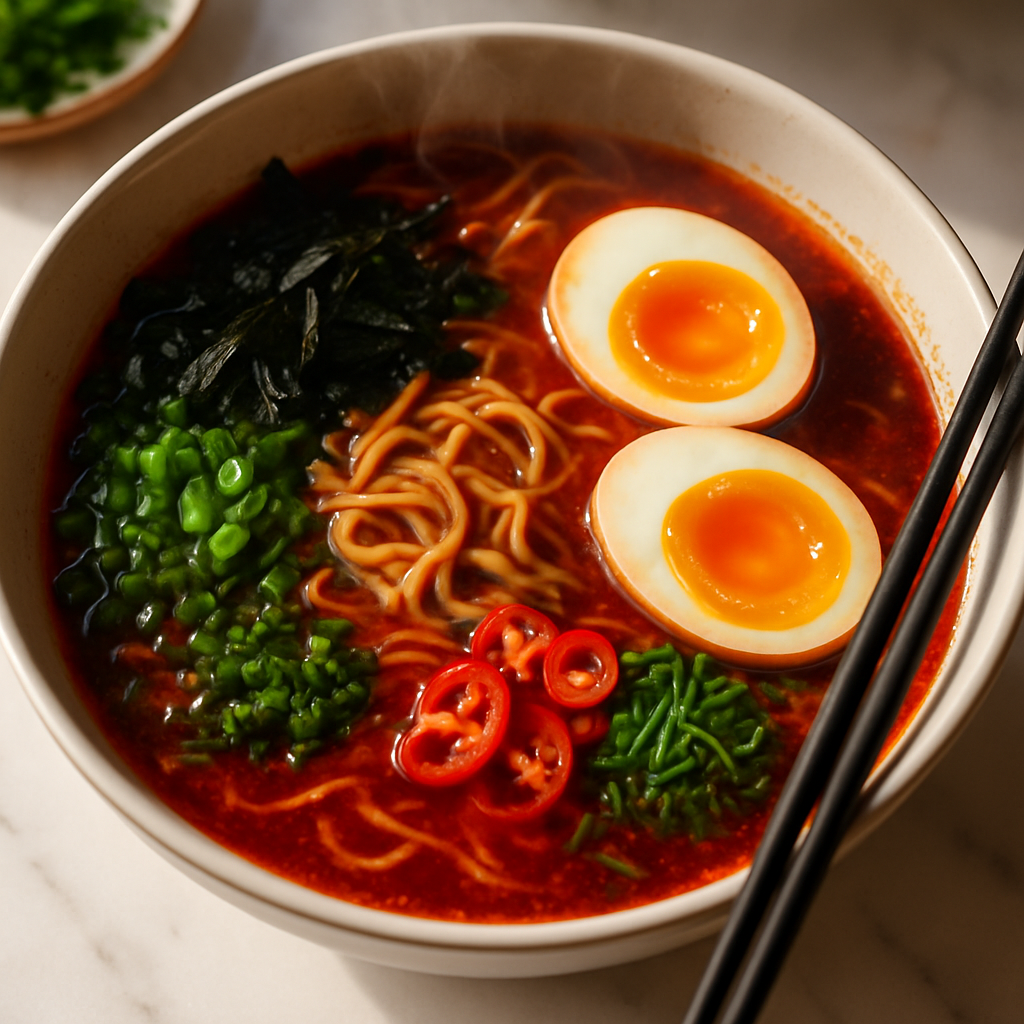
When the clock strikes midnight and hunger hits like a freight train, this fiery, soul-warming ramen is your answer. Built on a deeply savory gochujang and miso broth with a swirl of chili oil, nestled with chewy noodles and crowned with a perfectly jammy soft-boiled egg that melts into the broth with every spoonful. This is the ramen that turns a quiet kitchen into a cozy sanctuary — bold, spicy, and unapologetically indulgent.
Why this recipe works
This Midnight Fire Ramen with Silky Soft-Boiled Eggs recipe has been crafted to deliver restaurant-quality results in your home kitchen. At just 30 minutes from start to finish, it fits perfectly into a busy schedule without sacrificing flavor. Each serving comes in at 620 calories with 28g of protein, making it a balanced choice for any meal.
What you will need
This recipe uses 22 simple ingredients that you can find at any grocery store:
- 2 large eggs
- 2 tablespoons soy sauce
- 1 tablespoon mirin
- 1 cup water
- 3 cups chicken broth or dashi stock
- 1 cup water
- 2 tablespoons gochujang (Korean chili paste)
- 1.5 tablespoons white miso paste
- 1 tablespoon soy sauce
- 1 teaspoon sesame oil
- 1 teaspoon rice vinegar
- 1 tablespoon chili oil, plus more to serve
- 4 cloves garlic, minced
- 1 inch fresh ginger, grated
- 2 portions fresh or dried ramen noodles
- 2 stalks green onions, thinly sliced
- 1 sheet nori, halved
- 1 tablespoon toasted sesame seeds
- 4 slices fish cake (narutomaki) or chashu pork
- 1 handful bean sprouts
- 1 tablespoon butter
- to taste red pepper flakes
Step by step instructions
Step 1: Boil and Marinate the Eggs
Bring a small saucepan of water to a rolling boil. Gently lower the eggs in with a spoon and cook for exactly 6 and 30 seconds. While eggs cook, mix soy sauce, mirin, and 1 cup water in a small container. Transfer eggs to an ice bath for 5, then peel carefully. Place peeled eggs in the soy marinade and let them soak for at least 10 while you build the broth. The longer they soak, the deeper the flavor — overnight in the fridge is heavenly.
Step 2: Sauté the Aromatics
In a medium saucepan over medium heat, add a small drizzle of neutral oil. Add the minced garlic and grated ginger and sauté for 60 to 90 seconds until fragrant and just golden, stirring constantly. Don't let them burn — that bitter edge will haunt your broth.
Step 3: Build the Spicy Broth
Add the gochujang to the garlic and ginger and stir it into the aromatics for about 30 seconds to bloom the paste and deepen its flavor. Pour in the chicken broth and water and stir to combine. Bring to a gentle simmer over medium-high heat, then reduce to medium-low. Whisk in the miso paste until fully dissolved — never boil miso, it kills the probiotics and dulls the flavor. Stir in soy sauce, rice vinegar, sesame oil, and chili oil. Taste and adjust heat with more gochujang if you want to go full inferno. Simmer gently for 10.
Step 4: Cook the Noodles
Bring a separate pot of unsalted water to a boil. Cook ramen noodles according to package directions, usually 2 to 4 for fresh and 3 to 5 for dried. Drain and divide between two deep bowls immediately — do not let them sit or they will clump.
Step 5: Assemble and Serve
Ladle the blazing hot broth generously over the noodles in each bowl. Slice the marinated soft-boiled eggs in half lengthwise and nestle them cut-side up in the broth so you can see that glorious jammy yolk. Arrange bean sprouts, fish cake or chashu slices, and nori on the side. Drop a small knob of butter into the center of the bowl for a silky richness, then drizzle extra chili oil over everything. Shower with green onions, sesame seeds, and red pepper flakes. Eat immediately, alone, in the dark, at midnight — perfection.
Easy substitutions
Missing an ingredient? Here are some swaps that work perfectly:
- gochujang → sriracha mixed with a pinch of red miso for a similar sweet-spicy-fermented vibe
- chicken broth → vegetable broth or instant dashi for a lighter or pescatarian version
- fresh ramen noodles → instant ramen noodles (discard the seasoning packet), udon, or soba
- mirin → 1 teaspoon sugar dissolved in 1 teaspoon rice wine or dry sherry
- fish cake → sliced tofu, chashu pork, rotisserie chicken, or crispy mushrooms
- white miso → red miso for a deeper, saltier flavor or yellow miso as a middle ground
Common mistakes to avoid
Watch out for these pitfalls that can affect your results:
- Boiling the miso paste — always add miso off the heat or at a gentle simmer to preserve its flavor and beneficial cultures
- Overcooking the eggs past 6 30 seconds — the yolk should be jammy and slightly molten, not chalky
- Letting the garlic burn during sautéing — burnt garlic makes the entire broth taste bitter and acrid
- Letting noodles sit too long before adding broth — they clump and absorb liquid unevenly; always add broth immediately
- Skipping the ice bath for the eggs — it stops cooking instantly and makes peeling dramatically easier
- Adding all the gochujang at once without tasting — spice tolerance varies wildly, build heat gradually
- Using pre-shredded nori instead of a whole sheet torn by hand — it absorbs moisture better and gives a satisfying chew
Nutrition facts
Per serving: 620 calories, 28g protein, 74g carbs, 24g fat, 5g fiber.
Ready to cook?
Get the interactive recipe with adjustable servings, built-in timers, and ingredient checklist.
View full recipe →