How to Make the Perfect Thai Peanut Pasta
Thai-Italian Fusion · Easy · 25 min · 4 servings
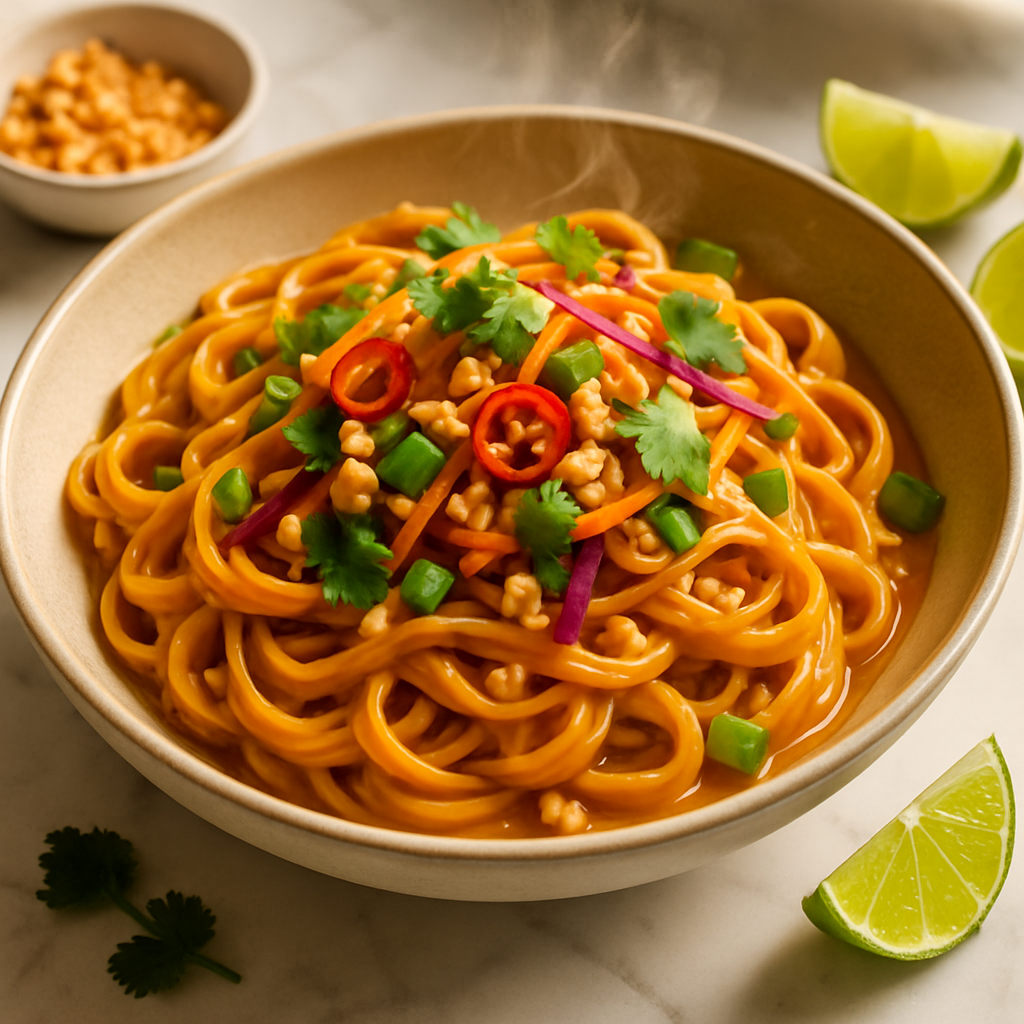
Al dente spaghetti is tossed in a rich and nutty Thai peanut sauce with a hint of lime, ginger, and chili heat. Topped with crunchy chopped peanuts and fresh scallions, this dish is ready in under 30 minutes and satisfies cravings for both pasta and Thai takeout.
Why this recipe works
This Thai Peanut Pasta recipe has been crafted to deliver restaurant-quality results in your home kitchen. At just 25 minutes from start to finish, it fits perfectly into a busy schedule without sacrificing flavor. Each serving comes in at 560 calories with 18g of protein, making it a balanced choice for any meal.
What you will need
This recipe uses 6 simple ingredients that you can find at any grocery store:
- 400 grams spaghetti or linguine
- 0.5 cup creamy peanut butter
- 3 tablespoons soy sauce
- 1 can coconut milk full fat
- 2 whole limes juiced and zested
- 4 whole scallions thinly sliced
Step by step instructions
Step 1: Cook the Pasta
Bring a large pot of generously salted water to a rolling boil. Add the spaghetti and cook according to package directions until it is al dente, which is usually 1 to 2 minutes less than the package suggests. Before draining reserve one full cup of the starchy pasta cooking water as it is essential for adjusting the sauce consistency. Drain the pasta and do not rinse it because the starch helps the sauce adhere.
Step 2: Build the Peanut Sauce
In a medium saucepan over low heat combine peanut butter, soy sauce, coconut milk, lime juice, lime zest, 1 tablespoon of sriracha, 1 teaspoon of freshly grated ginger, and 1 minced garlic clove. Whisk constantly over gentle heat until the sauce becomes completely smooth and begins to bubble gently around the edges. The sauce should coat the back of a spoon. If it is too thick add a splash of the reserved pasta water.
Step 3: Combine and Toss
Add the hot drained pasta directly to the saucepan with the peanut sauce. Using tongs toss vigorously for 1 to 2 minutes over low heat until every strand is thoroughly coated. Add reserved pasta water a little at a time if the sauce is too thick or clingy. The heat from the pasta and the starchy water will help the sauce become silky and cling beautifully to each noodle.
Step 4: Garnish and Serve
Divide the Thai peanut pasta into bowls. Top each serving with sliced scallions, a handful of roughly chopped roasted peanuts, a few sprigs of fresh cilantro, and an extra squeeze of lime juice. A drizzle of sesame oil over the top adds a lovely finishing aroma. Serve immediately as the pasta is best when the sauce is warm and loose.
Easy substitutions
Missing an ingredient? Here are some swaps that work perfectly:
- spaghetti → rice noodles soaked in hot water for a fully gluten free version that leans closer to traditional pad thai
- creamy peanut butter → almond butter or sunflower seed butter for those with peanut allergies while maintaining the creamy nutty sauce profile
Common mistakes to avoid
Watch out for these pitfalls that can affect your results:
- Rinsing the pasta after cooking which removes the surface starch that helps the peanut sauce stick evenly to the noodles
- Making the peanut sauce over high heat which causes it to seize up become grainy and separate rather than remaining smooth and creamy
Nutrition facts
Per serving: 560 calories, 18g protein, 72g carbs, 24g fat, 5g fiber.
Ready to cook?
Get the interactive recipe with adjustable servings, built-in timers, and ingredient checklist.
View full recipe →