Bibimbap
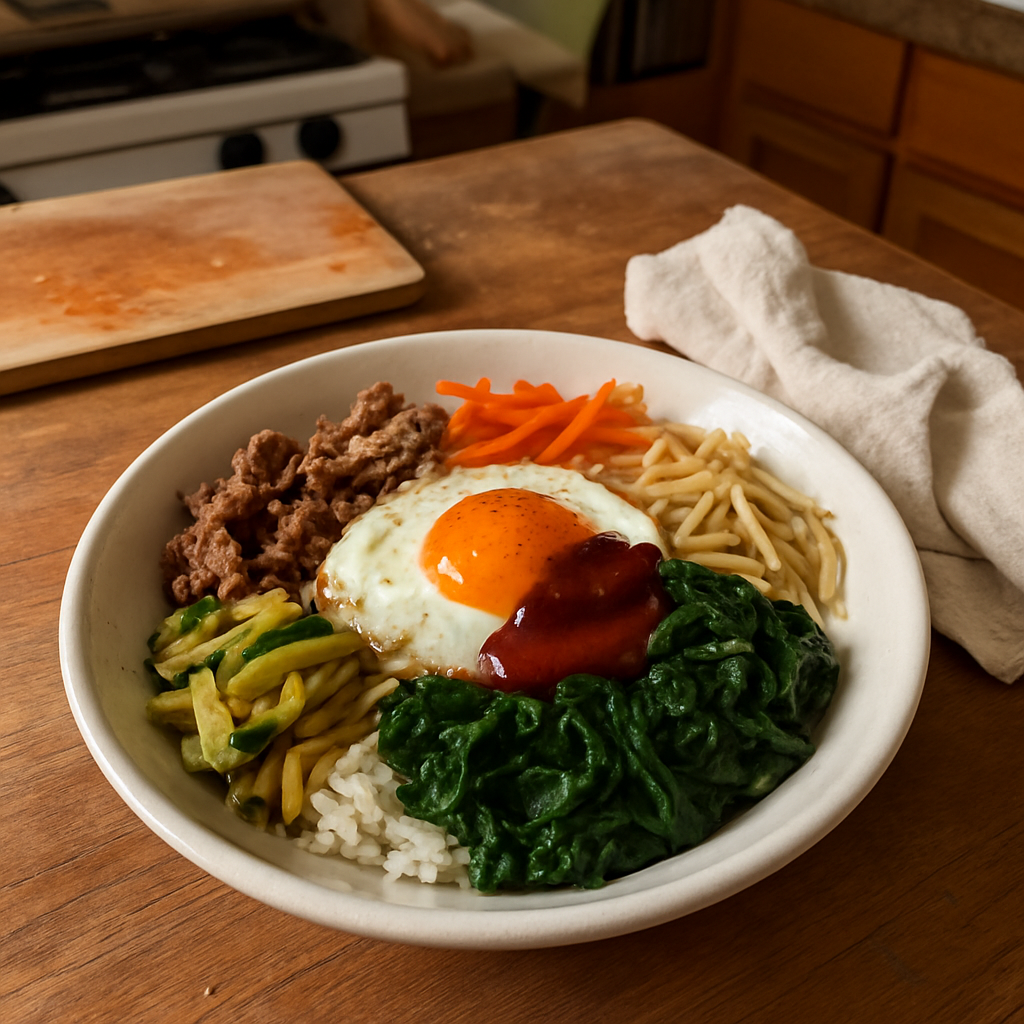
Bibimbap is a vibrant Korean rice dish topped with an array of sautéed vegetables, marinated beef, a fried egg, and a spicy gochujang sauce, all served over steamed rice.
A colorful mixed rice bowl topped with seasoned vegetables and beef, garnished with a fried egg and gochujang.
Nutrition per serving
Ingredients
Grain
Protein
Vegetables
Sauce
Spices and Seasoning
Garnish
Instructions
Prepare the Rice
Rinse the rice under cold water until the water runs clear. Cook the rice in a rice cooker or pot according to package instructions.
Cook the Beef
In a pan, cook the ground beef over medium heat until browned. Drain excess fat and add soy sauce, sugar, garlic, salt, and black pepper. Stir and cook for another 2 minutes.
Sauté the Vegetables
In a separate pan, sauté spinach, bean sprouts, carrots, and zucchini separately, adding sesame oil and salt to each for flavor. Cook until just tender.
Fry the Eggs
In another pan, fry the eggs sunny-side up until the whites are set but the yolks are still runny.
Assemble the Bibimbap
In a bowl, place a serving of rice, top with beef, sautéed vegetables, and a fried egg. Drizzle with gochujang and sprinkle with sesame seeds and chopped green onions.
Serve
Serve warm and mix everything together before eating.
Substitutions
Common mistakes
I made this!
Cooked this recipe? Share your photo and inspire others.
Nutrition Facts
Per serving
Dietary Information
Allergen Notice
Please check individual ingredients for allergens. Common allergens in recipes may include:
Always verify ingredients if you have food allergies or sensitivities. See substitutions above for allergen-free alternatives.
Health Benefits
💪 High Protein: Great for muscle building, recovery, and keeping you full longer. Ideal for active lifestyles and fitness goals.
�; High Fiber: Supports digestive health, helps regulate blood sugar, and keeps you feeling satisfied between meals.
🍴 Home Cooked: Cooking at home means you control the ingredients, the portions, and the quality. No hidden additives or excessive sodium.
Good For
Nutritional values are estimates based on standard ingredient data. Actual values may vary based on specific brands, preparation methods, and serving sizes. This information is not a substitute for professional dietary advice. Consult a healthcare provider for specific dietary needs.